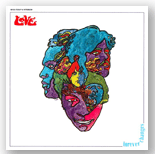

(the day-glow ink cover art is SO SIXTIES! Love it!)
"A Life time of Listening to Five Mean Years-THE DOORS" By Greil Marcus
LA TIMES review by Camille Paglia
Within an electrifying few years during the 1960s, rock ’n’ roll was transformed from a brash diversion of antsy teenagers into a serious genre that threatened to rival the traditional fine arts. Instrumental in this swift development was a Los Angeles band, the Doors, whose charismatic but tormented and self-destructive lead singer, Jim Morrison, attained cultlike status after his mysterious death at age 27 in Paris in 1971, only four years after the release of their first album.
THE DOORS
A Lifetime of Listening to Five Mean Years
By Greil Marcus
Illustrated. 210 pp. PublicAffairs. $21.99.
Related
*
Books of The Times: ‘The Doors’ by Greil Marcus (November 16, 2011)
*
Times Topic: The Doors
Whether rock ever completely fulfilled its early promise is arguable. What seems incontrovertible, however, is that rock’s fabulous commercial success could be ruinous to young bands, which were pushed by record companies into the artificial environment of punishing tours in cavernous arenas designed for sports. The gifted Doors were among the first victims of this still near-universal corporate strategy.
No one seems better positioned to write about the Doors than Greil Marcus. A native and longtime resident of the San Francisco Bay Area, he witnessed the convulsions of the 1960s firsthand. As a music journalist and historian, he has mostly remained outside academe, a rarity among American public intellectuals. His 12 previous books include “Mystery Train” (1975), a pioneering appreciation of the then-derided Elvis Presley; “Lipstick Traces” (1989), a genealogy of punk rock that became canonical for postmodernist academics here and abroad; and several studies of Bob Dylan. Marcus has served as editor or co-editor of five projects, including “A New Literary History of America” (to which I contributed the article on Tennessee Williams).
It is unclear, however, to whom Marcus’s new book, “The Doors,” is addressed. Scanty background about the band is provided, and what is here often whizzes by out of chronological order. Marcus expects that the Doors’ career is widely known from Oliver Stone’s movie “The Doors” — but that hypnotically evocative film is 20 years old. Moreover, after listening to San Francisco radio in his car for a season last year, Marcus apparently assumes that Doors songs still blanket the airwaves, but that is not my experience as a rabid radio fan on the East Coast. Yes, the Doors appear on classic rock stations, but those are relatively few in our current market, regionally dominated by hip-hop, country or pop. Hence more foundational material on the Doors, even as a refresher for jaded baby boomers, would have been welcome.
For reasons not addressed until almost halfway through the book, Marcus pays more attention to rare concert and studio tapes than to the major Doors albums that made a sensation around the world. He eloquently records his emotional impressions or finds vivid analogues to musical experience. For example, he says his principal memory of listening to the Doors or seeing them live was “the complex and twisting thrill of being taken out of myself.” He describes the “lift” in Morrison’s voice in the Doors’ first hit song, “Light My Fire,” as “a door swinging open in the wind, seen from a distance.” The Doors’ exquisite song “The Crystal Ship” is “pitched between dream and waking, speech and silence, fantasy and act, death or the next morning.” This is beautiful and memorable writing.
But too often, Marcus bruisingly truncates his own mood of bewitching reverie to veer away to some other subject — Thomas Pynchon, Christian Slater, Wayne Wilson, Pop Art, Chuck Berry, Wallace Berman, Harvey Keitel. These arch juxtapositions are so lengthy and distracting that the baffled reader may forget this is a book about the Doors. Worse are the thickets of often garrulous footnotes ending each of the 21 chapters — dismayingly obstructive support material that belongs in the back.
Highly admirable here is the respect Marcus accords to the three virtuoso musicians who provided a gorgeous framework for Morrison: the keyboardist Ray Manzarek, the guitarist Robby Krieger and the drummer John Densmore, who were marginalized in Stone’s film. However, I missed some acknowledgment of their varied musical backgrounds (classical, Chicago blues, folk, flamenco, jazz), which provided such brilliant syncretism in the Doors’ eerie sonic landscape. Oddly for a California writer, Marcus says little about the immense differences between the funky, fast-track Sunset Strip club scene from which the Doors emerged in Los Angeles and the utopian San Francisco milieu of hippie flower power. Furthermore, Marcus notes no parallels between the dark themes of the Doors and those of the Velvet Underground, whom Morrison in fact saw perform in Los Angeles while the Doors were working on their first album. (Cher, attending the same show, reportedly said of the Velvets’ music, “It will replace nothing, except maybe suicide.”)
Central to Marcus’s argument is that the Doors prophetically anticipated both the political assassinations of 1968 and the Charles Manson murders of 1969. As an early Doors fan (a photo of Morrison as a surly Dionysus hung on my wall from college through graduate school), I find this linkage strained. The shocking Oedipal ritual of the Doors’ song “The End,” with its fratricide, patricide and incest, was hallucinatory family romance based, as Morrison said, on ancient myth and “poetic drama.” It was not Manson’s squalid butchery-by-proxy, where the cowardly mastermind was not even present. In general, Marcus shows little sympathy for Morrison’s archetypal imagination, steeped in Freud and Jung as well as Native American religion, which goes virtually unmentioned here. The musicians of the Doors explicitly described Morrison’s goals and limit-testing methods as “shamanistic” and supported them in performance. But Marcus shrugs off Morrison’s chilling allusions to lizards and snakes as mere hokum.
Puzzlingly, Marcus turns for amplification to unrelated contemporary novelists but ignores Morrison’s professed debt to prior poets. Not until Page 132 are we briefly informed without comment that the Doors saw themselves in “the stream of art maudit that carried Blake, Poe, Baudelaire, Rimbaud, Nietzsche, Jarry, Buñuel, Artaud and Céline.” Marcus certainly appreciates Morrison’s lyricism but offers minimal interpretation (“a captivating image”). I was disappointed to find no reference to Morrison’s defiantly Byronic proclamation from “When the Music’s Over,” which stunned me in college: “Cancel my subscription to the Resurrection / Send my credentials to the House of Detention.”
Everyone has his or her personal take on popular culture. For me, the Doors bridged rock music with the avant-garde, including angst-ridden European art film (Morrison and Manzarek had been film majors) and radical American theater. Marcus does not say that Morrison had seen a California performance of Julian Beck and Judith Malina’s Living Theater just a few days before the notorious 1969 concert in Miami, where he taunted and goaded the crowd into a frenzy and allegedly exposed himself, leading to his arrest and endless, sapping legal problems.
Greil Marcus is an American original whose reflections and digressions are always thought-provoking. But there are passages in this book that desperately need fine-tuning, notably a painful denigration of the great Lotte Lenya, whose classic performance of Bertolt Brecht and Kurt Weill’s “Alabama Song” inspired the Doors’ deliciously decadent version on their first album. Marcus disregards the fact that Brecht and Weill’s “Threepenny Opera,” starring Lenya herself, had undergone a huge revival in the 1950s and that a Lenya album, released by Columbia Masterworks with a provocatively sophisticated cover drawing, was on display in many college rooms in the 1960s. I also winced at Marcus’s passing shot at “the terrible L.A. new wave band the Motels,” which carelessly slights a group whose situating of intense emotion within oblique alienation actually belonged to the Doors’ artistic line. Freely available on YouTube are such haunting Motels songs as “Remember the Nights,” “Suddenly Last Summer” and “Shame,” with its searing torch vocal by Martha Davis.
_________________________________________________

David Gilmore "Live In Gdansk"
....as great as ever!! With David as brilliant as ever on guitar vocals sax, the amazing Richard Wright, & Phil Manzanera (Roxy Music) just brilliant on guitar, as always.
________________________________________________
JUDY COLLINS" "Bohemian" 2011
I saved the best for last! Absolutely brilliant...Sweet Judy Blue Eyes hasn't lost ANYTHING and sends me back to the 60's with the note of her beautiful voice....mostly her own compositions including the opener--
Morocco
http://www.youtube.com/watch?v=2rwM6F4G4co

The timeless, ageless Judy Collins is back with another stunning album that showcases both her astounding vocal range and her impeccable songwriting and choice of material. The CD opens with the atmospheric, mysterious "Morocco", a song Collins wrote herself with a haunting melody and exquisite lyric, Collins' soaring voice backed by the vocal group Olabelle.
Next is a superb treatment with Shawn Colvin as a duet partner on Joni Mitchell's beautiful "Cactus Tree". "Pure Imagination" is a dazzling rendition of a song from the Willie Wonka movie, originally sung by Gene Wilder. For my money, Collins' voice has always bested Barbra Streisand's and I can't imagine Streisand even doing it this beautifully. It is truly that good!
Also included on the CD is a wonderful, newly recorded studio version, with a slightly different opening and closing than the live version, of "Wings of Angels" which Collins has performed in concert for years. Collins wrote it for her late son Clark who, sadly, committed suicide in the early '90s. Here it packs an even greater punch and Collins' phrasing makes it come alive yet again.
Collins and Wildflower Records label mate Kenny White team up for what is my favorite non Collins' penned song, Michael Veitch's heartfelt, elegiac tune "Veterans Day". It is enchanting and a great tribute to fallen soldiers, ranking among Collins' best interpreations.
Collins has a long history with the writer Jacques Brel, having recorded his songs "Sons Of", "La Colombe", and "Marieke" on her previous CDs "Whales and Nightingales", "Running For My Life", and "In My Life". Her new recording of Brel's "The Desperate Ones" is sung with wistful restraint and is a delight. Ditto for the Woody Guthrie penned "Pastures of Plenty" and the delightful, magical lullaby "All The Pretty Horses".
Jimmy Webb, who contributed the song "Gauguin" to Judy's superb last album "Paradise", provides the whimsical "Campo de Encino". Collins has a ball with the tune and her enjoyment at playing with the lyrics with her lilting soprano is evident, especially with the line "chamber group playin' without any clothes, good for the oboes but hard on the cellos."
Collins particularly shines on the CD's penultimate track about her mother's death from Alzheimer's disease "In The Twilight". It is otherworldy and heartbreaking all at once, filled with images of her mother's flower garden and her love for Judy, her brothers, and sisters. The song itself, with its lovely imagery and personal lyrics, is worth the price of the CD, as is the album closer "Big Sur", which includes one of my favorite Judy lyrics of all time, "please pray for me, you padres of the ocean, pray I find my heart among the waves. For freedom's left me panting for the bondage, and you can see the life beyond the grave."
Kudos to Judy, Russell Walden, her musical director and all the superb players who make "Bohemian" such a five star sonic treat; Grammy worthy and perhaps the best album of 2011!
B. Potts-Amazon
Cactus Tree
http://www.youtube.com/watch?v=lSQDr1LR ... re=related
This really may be one of her best albums ever.....at 72, Judy is as beautiful, strong, and timeless as always...god bless you, Judy.
