Blackbird
http://www.youtube.com/watch?v=XzTn-Vhq2FE

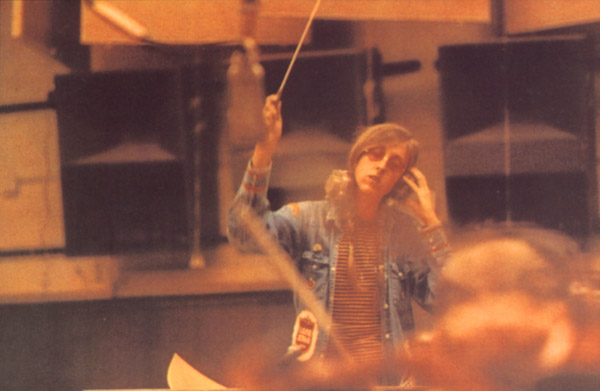
Brilliant and bewitching, she could have been the most famous singer-songwriter of the Seventies. But Judee Sill was different from her Californian peers ... For the first time, Barney Hoskyns reveals the story of death, drugs, Bach and bisexuality behind an unjustly neglected talent
Sunday 12 December 2004
The Observer
'Out of the mud a lotus grows ...' Judee Sill liked to talk in flowery metaphors, often with a veiled religious tinge to them. Visiting England in the spring of 1972, she offered the mud/lotus image to a New Musical Express reporter as a way of explaining how beauty could stem from deep squalor.
Squalor she certainly knew about. Presented by David Geffen's Asylum label as the archetypal singer-songwriter of the period - all flaxen hair and acoustic guitar - Sill's background differed markedly from those of her navel-gazing peers.
While Joni Mitchell and her willowy sisters worked their way round the folk circuits of Greenwich Village, Judee was in reform school in Ventura, California. While Joni was warbling of Chelsea mornings in Manhattan, Judee was being arrested for stick-up jobs in the corner stores of LA's San Fernando Valley, driven to such desperate measures by a $150-a-day heroin habit.
'I did [heroin] with gusto because I wanted to escape my torment and misery,' Sill told Rolling Stone in 1972 of her three-year addiction. 'But then I figured if could maintain that kind of habit that long, the willpower I'd need to kick it would be a cinch.'
Sill did manage to kick heroin. When her mystical, intricate songs started to attract admirers in the LA of the late Sixties, she was clean and keenly focused on her career.
'Judee was troubled, but there were a lot of people then that were troubled,' says music business lawyer Bill Straw, who met her in the autumn of 1969. 'She had been a junkie, and she contrasted the white peace - the term she used for LSD - with the dark peace, which was heroin. But she was not using heroin when I knew her.'
Straw did legal work for Judee throughout the short span of her career on Asylum, when she briefly threatened to join Jackson Browne, JD Souther, Joni Mitchell, the Eagles and Linda Ronstadt in Geffen's pantheon of West Coast talent.
When Rhino Records last year reissued the Asylum albums Judee Sill (1972) and Heart Food (1973) as part of its limited-edition Handmade series, the rediscovery of Sill's talent prompted a few people to ask why she was never elevated to the heights her label-mates enjoyed.
On the sleeve of her first album Judee gushed 'David Geffen, I love you', the innocuous gratitude belying a genuine crush she had on him. But by the release of Heart Food her feelings towards the diminutive mogul-in-the-making had changed. The disappointment that neither album had made her a star slowly edged her back into the shadow-world of smack.
When Judee died in November 1979, she was so far off the rock map that Bill Straw didn't learn of her passing for almost a year.
My contention is this: had she been male and as pretty as Nick Drake, Sill would now be as big a cult figure as St. Nick himself. Songs such as 'The Pearl', 'The Phoenix' and 'Soldier of the Heart' are as beautiful as Drake's but far more schooled and complex. Classically trained, she combined her love of Bach and other composers with her taste for the mellow sound of Seventies California, melding them into a style she termed 'country-cult-baroque'.
If her songs share a complex delicacy with Joni Mitchell's, the two really sound nothing like each other. In fact, Judee Sill sounds nothing like anybody except Judee Sill, though echoes of her peculiar melodicism can be heard in the songs of Liz Phair.
'Judee was so different from everybody,' says Bill Straw. 'Everybody was writing oblique lyrics back then, but her oblique lyrics had a character of their own.'
Sill's songs suggest a hippie update of the cosmic epiphanies of William Blake or the metaphysical ecstasies of Henry Vaughan. Tracks such as 'The Lamb Ran Away with the Crown' and 'When the Bridegroom Comes' are explicitly religious, though one could hardly describe them as Christian rock. Judee wouldn't have. For her, Christ was a symbol of the elusive, yearned-for lover - 'my vision of my animus', as she put it.
Sill has touched a lot of souls over the years since her virtually unnoticed death. Recently, disciples have been coming out of the woodwork in ever greater numbers, from XTC's Andy Partridge to American singer-songwriter Shawn Colvin, who included Judee's 'There's a Rugged Road' on her 1994 album Cover Girl.
'She didn't sound like anybody else,' says Colvin, 'but it was sort of like Brian Wilson or somebody, what with all the double-tracking she did. It was streetwise and yet it was religious.'
'I knew very little about Judee,' reflects Graham Nash, of Crosby, Stills, Nash and Young, who produced her debut single 'Jesus Was a Crossmaker'. 'But I do know that she was a very bright, talented, funny lady. She kept to herself a great deal. It was so sad to hear of her death. I personally had no idea she was taking drugs on that scale.'
For JD Souther, who broke Sill's heart and inspired her song 'Jesus Was a Crossmaker', there was nobody more important in his musical career, which included co-writing some of the Eagles' biggest hits.
'She was light years ahead of most of us,' he says. 'I thought Jackson Browne was the furthest along at having learnt songwriting, but then I met Judee and thought, "****, man, she's school for all of us".'
Like more than a few prematurely dead cult heroes, Judee Sill was the unhappy product of privileged dysfunction. Feisty and bursting with talent, she was as insecure as musicians come.
Born in Oakland, California, on 7 October, 1944, Judy Lynn Sill was a typical middle-class California girl but came from English-Irish stock from the American South. Her father, a raffish type who owned a bar, imported and sold rare animals, a passion that Sill herself shared in her adulthood.
When Judee was eight her father died of pneumonia - a loss that shattered her. To make matters worse, her older brother had only just taken control of the business when he was killed in a car crash.
When Sill's alcoholic mother, Oneta, upped sticks for southern California, she met and married Tom and Jerry animator Ken Muse. Feeling betrayed and rejected, Judee declared war on her hard-drinking mother and stepfather and began acting out with the bad kids at high school. At Muse's Encino home she defiantly refused to show him respect. 'He was an alcoholic,' she told Rolling Stone. 'Mean, dumb, narrow-minded. He used to beat dogs and stuff like that.'
At 15, fleeing the violence and abuse at home, Judee succumbed to the charms of an older man who just happened to be an armed robber. 'I saw a lot of terrible injustice all around me,' she told Record Mirror, 'so I fell in with a bunch of hoodlums to express myself poetically.'
Together this Bonnie and Clyde of the Valley held up gas stations and liquor stores, stick-ups that got him a jail sentence and Sill nine months in a girls' reform school where she learnt to play the church organ.
Enrolling in 1963 at San Fernando Valley Junior College, where she majored in art, Sill played piano in the orchestra. 'I always wanted to harmonise with somebody, but I couldn't find anyone,' she told NME's James Johnson. 'I learnt to play the piano so I could harmonise with that.'
After driving across America with two girlfriends in the summer of 1964, Judee flunked out of college. Orphaned when Oneta Muse died of cancer in the early winter of 1965, she was now alone in the world and with only a modest income from her mother's shares in a Texan oil company. Soon she was dabbling with heroin in the company of keyboard player Bob Harris, whom she married.
Arrested for forging cheques, Sill was thrown in jail, where she was 'put into a dirty cell to puke my guts out' as she withdrew from smack. In what she called 'the grungy central Hollywood flatlands' she regularly turned tricks for money.
'As a hooker,' she told Rolling Stone , 'my heart wasn't in it ... all I really cared about was getting that needle in my vein, squeezin' off.'
In interviews, Sill said the spiritual hunger that drove her to seek the 'dark peace' also drove her to express her pain in song. Her discovery of religious and theosophical literature, as well as magic, gave her new subjects to sing about, too.
With amusing pomposity, Sill informed the NME that her three principal influences were Pythagoras, Bach and Ray Charles. Yet there is something almost mathematically perfect about her best songs.
'My music is really magnified four-part choral style,' Sill told the Los Angeles Herald-Examiner. 'It gets to people's emotional centres quickly. That's why all church music is in four-part choral style.'
Off drugs and out of prison, Judee decided that she was going to become 'the greatest songwriter in the world'. Late in 1966, Bob Harris introduced her to John Beck of LA group the Leaves. 'Dead Time Bummer Blues', a song she had written while awaiting trial, so impressed Beck that he persuaded the Leaves to record it.
'Although I remember being very impressed with Judee's song construction,' Beck's fellow Leaf Jim Pons admits, 'I didn't think she had much commercial potential.'
Through Beck, Pons slowly learnt of Sill's torrid past. But the stories of addiction and prostitution didn't gel with the personable, curious woman he befriended. 'By the time I got to know her she was an intensely spiritual, devout disciple of self-awareness.'
When the Leaves fell from pop's tree, Pons became the new bass player for the Turtles, a more successful LA group (they had top 10 hits with 'Eleanor' and 'Happy Together') whose star was nonetheless starting to wane. In emulation of the Beatles, the group's Mark Volman and Howard Kaylan decided to launch their own music publishing company, Blimp Productions.
'Judee had been in Hollywood sort of poking around,' recalls Volman. 'Our hope at the time was that giving her a place to make music and write songs might help her through her problems.' Volman and Kaylan, who thought Sill might turn out to be their very own Mary Hopkin, were enamoured enough of the gorgeous 'Lady-O' to record it as a Turtles single in 1969.
'Lady-O' was hardly a smash hit but it got Judee attention in the mushrooming singer-songwriter milieu of Los Angeles. At the hub of this scene was super-ambitious agent David Geffen. He caught wind of Sill's sets at little Hollywood dives like Arty Fatbuckle's, where she performed regularly for a devoted coterie of female followers.
'I remember her coming home one night swooning over Geffen and telling me he was the man for her,' says Pons. 'She also thought he was going to help her get to the top, which she had decided was her destiny.'
Geffen, who'd made the first of his fortunes on the back of another bisexual songstress, Laura Nyro, landed Sill a lucrative publishing deal with a handsome advance. The money enabled her to make a down payment on a house on the Valley side of Stone Canyon.
'There was a lot of hanging out at her house,' says Straw. 'She was surrounded by her adoring female fans. I remember going round there one morning and there were maybe four or five other women, all sunbathing in the nude.'
According to an old school friend, Sill went through a series of female lovers whom she treated with mild contempt. 'I just have her around to clean my house,' she would say of some poor besotted creature when friends visited the Stone Canyon house.
'At that point Judee said and did a lot of things for effect,' says Straw. 'She was a typical self-centred artist who treated everybody around her like they were servants.'
Although Atlantic Records was interested in her, Sill opted to wait until Geffen's Asylum label was up and running. To kill time she went on the road as a support act, sometimes in circumstances that made her seethe. 'Judee couldn't tolerate crowds that weren't appropriately respectful,' Pons recalls. On her one trip to the UK - when she appeared on The Old Grey Whistle Test - Judee bitched about having to open for 'snotty rock groups'.
'I saw her play once,' says Souther, 'and some woman asked her to play a Judy Collins song. She said, "I don't know that ****in' song and if I did I wouldn't play it". And I just thought, "Right on."'
In 1971 Sill fell in love with Souther, a Texas-born singer-songwriter who was at the heart of the hip Laurel Canyon clique. A man of impeccable musical taste but an inveterate womaniser, he tore Sill's heart to shreds. 'He went into the chambers of my heart and left it in disarray,' she told Rolling Stone. 'I felt devastated.'
'I remember going to a birthday party for Judee,' Straw says. 'There was a large group of people there, including Linda Ronstadt. Judee was interested in JD Souther, basically he then got interested in Linda Ronstadt. That really pissed Judee off.'
A bereft Sill finally went into the studio, with Geffen okaying John Beck and Jim Pons as producers. When Judee Sill saw the light of day in early 1972, it was the first album on Asylum. Along with 'Jesus Was a Cross Maker', the record featured such priceless examples of Sill's 'baroque-country' style as 'Ridge Rider' and 'The Phantom Cowboy', and her own version of 'Lady-O'.
A masterpiece, Judee Sill had the misfortune to be followed swiftly on the Asylum release schedule by the debut albums of Jackson Browne and the Eagles. It wasn't long before Sill was lost in David Geffen's shuffle. By the time Grover Lewis's Rolling Stone interview appeared in April 1972, she was already expressing misgivings about the miniature mogul.
'When I first met him I thought he was some kind of knight in shining armour, you know,' she told Lewis. 'But I didn't understand the other things, the things that made him such a ruthless businessman.'
'I thought it was only a matter of time until Judee wrote a hit song in the vein of, say, Joni Mitchell,' says Pons. 'But I don't think Asylum knew what they had with her.'
Pons and John Beck were gone when Sill recorded 1973's Heart Food, for which she received a co-production credit with Henry Lewy. It's another magnificent record, with the same distinctive blend of country, gospel and classical influences and the same intense imagery in her lyrics.
'I've been lookin' for someone who sells truth by the pound,' Sill sang on 'The Pearl'. 'Then I saw the dealer and his friend arrive, but their gifts looked grim.'
To be fair, the presence on Heart Food of such stellar session musicians as Jim Gordon and Bobbye Hall Porter suggests that Asylum wasn't stinting on the budget. The album sounds as lustrous and lovely as the music Jimmy Webb was making in the early Seventies. From the gossamer reverie of 'The Kiss' through the peppy 'Soldier of the Heart' to the celestial shimmer of 'The Phoenix', Heart Food is one of the great LA singer-songwriter albums of the era.
The closing track, 'The Donor', is an extraordinary requiem of a song that employs the liturgical mantra 'Kyrie Eleison' in a web-like, multi-tracked chorus worthy of Arvo Part. These words, a summation of her musical life, could almost be Sill's last:
Now songs from so deep,
While I'm sleepin',
Seep in ...
Sweepin' over me.
Still the echo's achin':
"Leave us not forsaken."
[Warner-Tamerlane Publishing Corp. (BMI)]
It's strange how few people from that era appear to have any recall of Judee Sill. When I interviewed manager Ron Stone, who worked for Geffen throughout the formation of Asylum Records, the name apparently meant nothing to him. It made me wonder if there was some lingering guilt about Sill's fate - a conspiracy of silence around the fact that she had more talent than many of the Asylum artists who did make it.
'She did have a falling-out with Geffen just after the release of Heart Food,' says Sill expert Bob Claster, who has made the demos for her unreleased third album available on the web. 'She made a remark in a radio interview which sorely displeased him, and he never gave her the opportunity to explain or apologise. This not only ended her relationship with Geffen and Asylum, but some feel it ended her entire recording career.'
What exactly happened to Judee Sill for the remainder of the Seventies until her death is shrouded in vagueness. It's likely that she went back and forth between Los Angeles and Mill Valley, where she had a second home.
'I knew Judee through the Seventies, slightly,' says Straw. 'I would run into her here and there. I remember seeing her at an Al Jarreau show after he got his Warners deal in 1975.'
At some point, it seems, a car accident reduced Sill to such pain that she returned to 'the dark peace'.
'I heard many years later that she despaired of her relationship with David Geffen and went back to drugs,' says Pons.
Because of her criminal record, doctors would not prescribe legal opiates to Sill. It was only a matter of time before she was scoring again on the street.
Scotsman Brendan Mullen, who later made his mark on the LA scene by opening the Masque club, had a peculiar encounter with Judee not long after arriving in California in 1975. Picked up by her in a restaurant on Melrose Avenue, he visited Sill the next afternoon.
'A beautiful mural-sized black and white photo portrait of Bela Lugosi hung above the fireplace,' Mullen writes. 'There was a large ebony cross behind her bed. The room glowed with racks of candles, the air reeked of incense and burning wax. All the curtains were drawn in the middle of the afternoon.' Only slowly did Mullen realise that Sill was smacked out of her skull.
Between bouts of sex with the naive young Scot, Sill read to him from Rosicrucian manuscripts and from Aleister Crowley's Snowdrops from a Curate's Garden. Later, he says, she seemed to 'morph into a serpentine cadaver', appearing to him as 'a huge, grey reptile, stretched out and curling around on top of the comforter'. Understandably, Mullen freaked and fled.
Years later, Sill fan and Elton John producer Gus Dudgeon found himself on a panel with a man who had once published her songs. He told Gus that Judee ended her life in 'a trailer home in a typical American low-rent trailer park, had been raped by some guy, definitely had a very serious drug problem, and that she'd been in serious pain from her back injuries.'
'To hear that she'd wound up in such desperate circumstances,' Dudgeon said, 'just added even more sadness to her story. She was a really tragic figure, and like so many of us, was obviously affected throughout her life by her hopeless relationship with her parents.'
The last person to have kept up with Sill was one of the school friends whom she accompanied on her 1964 drive across America. The friend, who calls herself simply 'D', says that Judee visited her in Santa Barbara in 1978.
'In the last conversation I had with her we discussed her oil income and how she might get more money out of it,' D notes on the "Remembering Judee" website. 'I suggested saving something to make interest. She scorned such a boring notion. I never heard from her again.'
On 23 November 1979, Judee Sill was found dead at her house in the unglamorous North Hollywood area where she'd spent most of her life. Cause of death was given as 'acute cocaine and codeine intoxication'. Her old Asylum friends did not find out until the following year.
'As the death was at her own hand, it's officially a suicide,' says Claster. 'There was no note left, and all who knew her were absolutely certain that she did not intend to die. She was flamboyant and egotistical enough that if that had been her intent, she'd have gone out with more of a bang and certainly left a note.'
Unlamented and all but forgotten until Rhino's sterling work in reviving her reputation, the tragic Judee Sill is well overdue for (re)discovery.
'I can barely speak about her without crying,' says Souther. 'There's no one more important in my musical life: she was certainly as important as Linda or Jackson or the Eagles, whatever our twisted brotherhood is. But it was too esoteric. Judee just didn't get out.'
Join her cult following today.
Thanks to Denny Bruce, Michelle Kort, Bob Claster, Debbie Kruger and Kevin Kennedy.
Sensitive souls: Sill's seventies peers
Linda Ronstadt Another Asylum signing, friend to Neil Young et al
Joni Mitchell Also a member of LA's Seventies rock aristocracy
Rickie Lee Jones Moved to LA in the early Seventies to make her debut
Laura Nyro
Like Judee Sill, a one-time protegee of David Geffen
Carole King
A New Yorker turned resident of Laurel Canyon
Carly Simon Another who left the East Coast to record in California
· The 'Remembering Judee' website is at kneeling.co.uk/pages/jsill/js_remember.asp
Sill's unreleased recordings, along with the demos for her third album, can be heard at webnoir.com/bob/music/