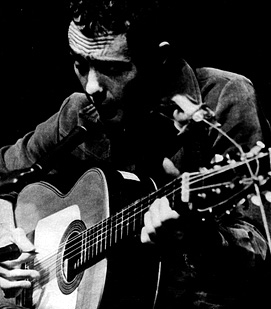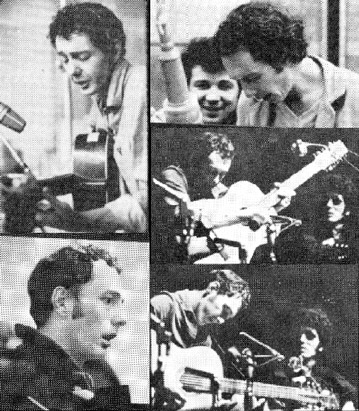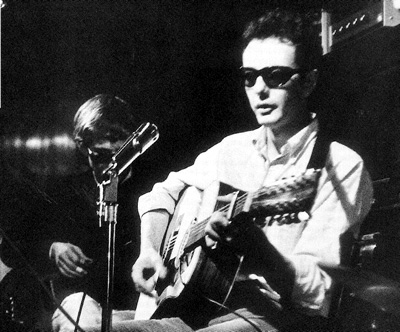
FRED NEIL
The Greenwich Village legendary artist that every aspiring artist wanted to just coattail hang with--from Dylan to Buzzy Linhart, Steve Stills to Phil Ochs...
DOLPHINS...breathtaking
https://www.youtube.com/watch?v=FO6CNj5YVF8
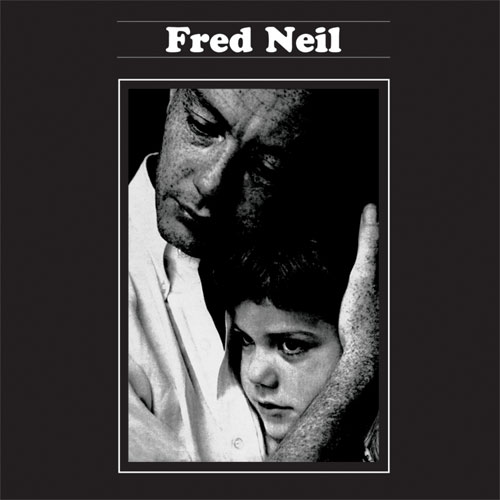
Fred Neil - Fred Neil (1966)
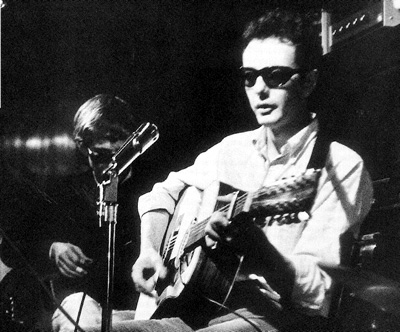
Fred Neil really never had any commercial success, he never really toured. However, he's one in a million. There are people out there who are ridiculously talented at something, so talented it makes most people envious. Yet they don't want a career in it because it's not what they're most passionate about. Neil is the first musician I've seen in this category. He spent the last 30 years of his life working to preserve dolphins. I may not fully understand it, but the man follows his heart - and I can totally get behind that.
The Dolphins
I didn't know what to expect, but this is not what I expected. The music in this track sounds very much like 3 Dog Night (obviously they went back in time to influence Neil) and the guitar has this very dirty, open sound to it. The bass has this very full, round, quick, McCartney-ish type tone. While bass may carry the song, the vocals grab a hold of your ears and it doesn't let go. It's such a big clash of styles, but it really, really works.
That's The Bag I'm In
The guitar holds down the fort with this simple blues line while the harmonica plays with such a sweet, soulful, and perfect tone to it. Neil sings a bit differently on this track, he's a little higher in his range and he's a bit looser. Listening to it, all I can think of is that I really want to record something like this. The instrumentation throughout is excellent, but in the mix everything is very even - there's so much space (other than the drums which are in some cases, virtually non-existent).
Faretheewell (Fred's Tune)
This track has so much energy with such a relaxed environment. The beautiful, gorgeous guitar sprinkles a light melody while the bass just plays on the and of 4 and 1 and to keep it turning around. It's haunting, it's captivating, it's incredible. Not enough has been said about Neil's voice, it's absolutely stunning. I would consider myself a baritone, but I usually write tenor parts to sing because that's more "commercially acceptable". However, Neil has me reconsidering everything.
All in all, Fred Neil is a man after my own heart. This album is what it is and it does not fake what it's not. The anchor of each song switches from instrument to instrument and the guitar work (while its not always prevalent in the mix) is masterful...
...Instrumentation is key in Neil's music. From the start of the album, I liked Neil's voice, but as the album continued I just fell deeper and deeper in love with it. It's ridiculous to me that this is the first time I've ever heard the name of Fred Neil. Neil is proof that there is no justice in this world, if the universe were truly balanced - we'd still be talking about him today. Jack Evans Album Reviews
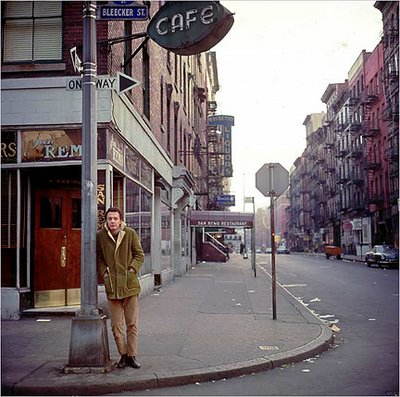
Fred Neil (March 16, 1936 – July 7, 2001)[1] was an American folk singer-songwriter in the 1960s and early 1970s. He did not achieve commercial success as a performer, and is mainly known through other people's recordings of his material – particularly "Everybody's Talkin'", which became a hit for Harry Nilsson after being used for the film Midnight Cowboy. Though highly regarded by contemporary folk singers, he was reluctant to tour (something he shared with Nilsson), and mainly spent the last 30 years of his life assisting with the preservation of dolphins.
Born in Cleveland, Ohio and raised in St. Petersburg, Florida, Neil was exposed to music at an early age, travelling around the US with his father who was a representative for Wurlitzer jukeboxes.[5] Neil was one of the singer-songwriters who worked out of New York City's Brill Building, a center for music industry offices.[6] While composing at the Brill Building for other artists, Neil also recorded six mostly rockabilly-pop oriented singles for different labels as a solo artist.[5] He wrote songs that were taken by early rock and roll artists such as Buddy Holly ("Come Back Baby" 1958) and Roy Orbison ("Candy Man" 1961).
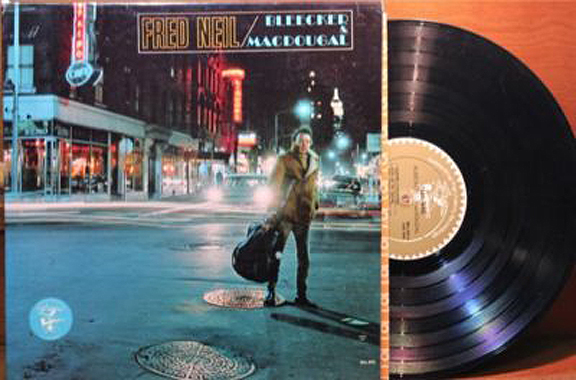
He met Vince Martin in 1961, and they formed a singing partnership; his first LP, Tear Down The Walls (1965) was recorded with Martin. During 1965 and 1966 Neil was joined on many live sets by the Seventh Sons, a trio trio led by Buzzy Linhart on guitar and vibes. Neil released Bleecker & MacDougal on Elektra Records in 1965, reissued in 1970 as A Little Bit of Rain. Fred Neil (released in 1966, relaunched in 1969 as Everybody's Talkin') was recorded during his residences in Greenwich Village and Coconut Grove, Florida, respectively (although for the latter, one session took place in Los Angeles).
After "Everybody's Talkin'", Neil's best-known song is "The Dolphins", which was later recorded by several artists including Tim Buckley, for whom Neil was a major influence.[5] Interested in dolphins since the mid-1960s, when he had begun visiting the Miami Seaquarium, with Ric O’Barry in 1970 Neil founded The Dolphin Research Project, an organization dedicated (according to Neil himself) to stopping the capture, trafficking and exploitation of dolphins worldwide.Increasingly involved in that pursuit, Neil progressively disappeared from the recording studio and live performance, with only occasional performances in the rest of the 1970s.
Later life and death
Neil left Woodstock in the mid-1970s and spent his remaining decades on the shores of southern Florida, involved in The Dolphin Project. After playing with Stephen Stills at New York City's Madison Square Garden in 1971, Neil began a long retirement, performing in public mostly at gigs for the Dolphin Project Revue in Coconut Grove, although in 1977 he played a benefit show for the Revue in Tokyo. A live date occurred in July 1975 at The Montreux Jazz Festival,[10] when Neil played with his core group of John Sebastian on harp, Harvey Brooks on bass, and Pete Childs on guitar. Michael Lang, one of the organizers of the 1969 Woodstock Festival and a 1970s Coconut Grove scene habituée, tried unsuccessfully to release this as a live LP. His last public performances were in 1981 at an outdoor concert at the Old Grove Pub in Coconut Grove, where he joined Buzzy Linhart for one song and stayed onstage for the rest of the set.
Many of Neil's 1970s recordings remain unissued, including a 1973 session with Quicksilver Messenger Service guitarist John Cipollina. In a later interview, Ric O'Barry claimed that Neil recorded two albums of all cover songs between 1977 and 1978 that were buried by Columbia Records.[11] According to Barry, he produced the first of the recordings in the sessions in Miami. Neil was joined by Pete Childs on guitar, John Sebastian on harmonica, and Harvey Brooks on bass. The second album was more fully arranged, with Neil accompanied by the New York session band Stuff and some old friends like Slick Aguilar. The songs on these albums were written by Bobby Charles, "Hey Joe"'s writer Billy Roberts, John Braheny and Bobby Ingram.
Neil died of natural causes in 2001, as he battled skin cancer.
Legacy
Neil gained public recognition in 1969, when Nilsson's recording of "Everybody's Talkin'" was featured in the film Midnight Cowboy; the song became a hit and won a Grammy Award. He was one of the pioneers of the folk rock and singer-songwriter musical genres, his most prominent musical descendants being Tim Buckley, Stephen Stills, David Crosby and Joni Mitchell. His most frequently cited disciples are Karen Dalton, Tim Hardin, Dino Valenti, Vince Martin, Peter Stampfel of the avant-folk ensemble The Holy Modal Rounders, John Sebastian (The Lovin' Spoonful), Gram Parsons, Jerry Jeff Walker, Barry McGuire, and Paul Kantner (Jefferson Airplane).
Some of Neil's early compositions were recorded by Buddy Holly and Roy Orbison. He played guitar on the demo version of Bobby Darin's 1958 hit "Dream Lover," and was a demo singer on a late-1950s Elvis Presley movie soundtrack session.
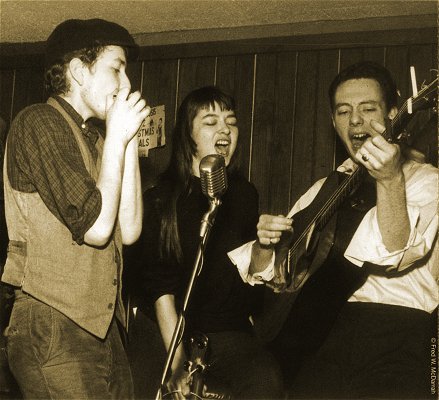
In Fred Neil's Rolling Stone obituary Anthony DeCurtis wrote, "So why is Neil a hero to David Crosby? Because back when Crosby was an aspiring folkie who just arrived in New York, Neil bothered to take an interest in him, just as he did for the young Bob Dylan, who backed Neil on harmonica at the Cafe Wha? in Greenwich Village. 'He taught me that everything was music,' Crosby says."
In his memoir, Richie Havens recalled Neil and then-partner Vince Martin's ability to make an entrance through the audience, sans microphones, and get the audience up and clapping by relying only on their harmonious vocals.
Discography
* 1965: Tear Down the Walls (Elektra) with Vince Martin
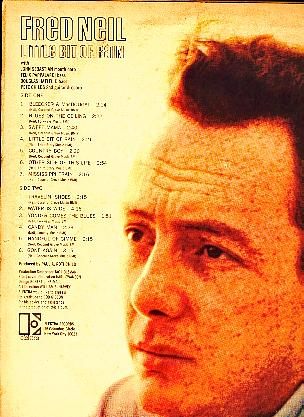
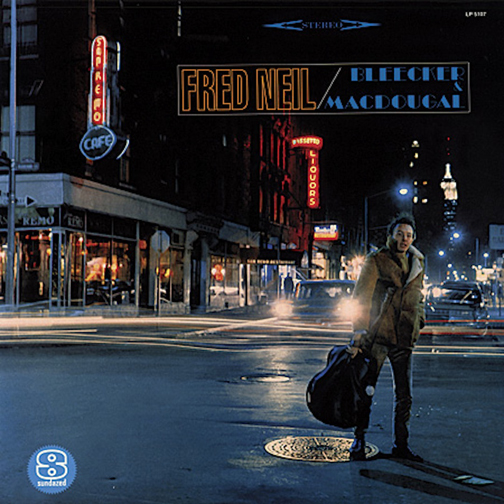
* 1965: Bleecker & MacDougal (Elektra) reissued in 1970 as A Little Bit of Rain
* 1966: Fred Neil (Capitol) reissued in 1969 as Everybody's Talkin'
* 1967: Sessions (Capitol)
* 1971: The Other Side of This Life (Capitol) live and alternate versions
Compilations
* 1986: The Very Best of Fred Neil (See for Miles)
* 1998: The Many Sides of Fred Neil (Collectors' Choice)
* 2003: Do You Ever Think of Me? (Rev-Ola)
* 2004: The Sky Is Falling: The Complete Live Recordings 1965-1971 (Rev-Ola)
* 2005: Echoes of My Mind: The Best of 1963-1971 (Raven)
* 2008: Trav'lin' Man: The Early Singles (Fallout)[9]
Anthologies including tracks by Neil
* 1963: Hootenanny Live at the Bitter End (FM)
* 1964: A Rootin" Tootin' Hootenanny (FM)
* 1964: World of Folk Music (FM)
BLEECKER & MACDOUGAL--full album play...an Elektra masterwork
https://www.youtube.com/watch?v=81LzZW6YJQQ
Around Bleecker and MacDougal streets, the Greenwich Village Folk scene in the sixties produced some of the best american musicians ever. Among them, one was a mystery : Fred Neil. Admired by Bob Dylan and Tim Hardin, the guy was secretive, almost elusive. Nowadays he is mostly known like a name, a shadow behind a legendary song he composed, the "Everybody's Talkin'" that Harry Nilsson sang in Midnight Cowboy (1969). But once you hear his own voice, a dark resonating baritone, well, you'll never forget it.
Maybe it was the toxic fame raising in the Village or the poisonous hard drugs he tried but Fred Neil disappeared of the music world for good in 1971 : he retreated in Florida, Coconut Grove to dedicate the rest of his life to his passion, the dolphins. There he founded the Dolphin Research Project to stopping the capture, trafficking and exploitation of these amazing creatures. Fred Neil never recorded anything else till his death in 2001. But he left us some masterpieces, for example one of the most haunting song ever, "The Dolphins"…
--widening circle
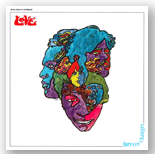
My favorite album and album cover from Elektra...I have the guitar player label...beautiful! -lk